
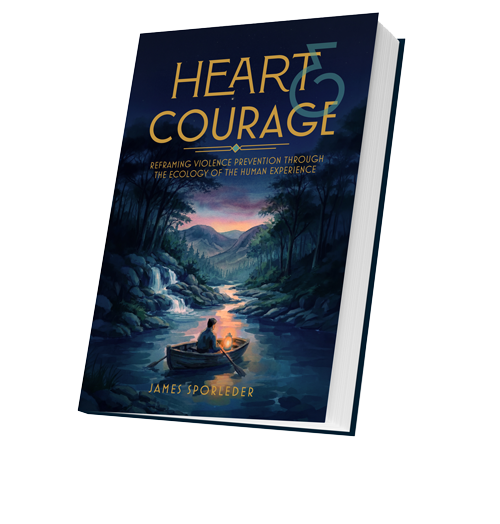
Heart & Courage™

Reframing Violence Prevention Through the Ecology of the Human Experience 

Heart & Courage Book Cover

Sometimes the most important things are the hardest to see

We naturally notice what people do. But it can be much harder to see what they might be carrying.

Each of us moves through a complex array of relationships, environments, histories, pressures, losses, and life circumstances that shape how we respond to and move through the world. Behavior is rarely the beginning of the story. More often, it’s the visible expression of the deeper currents of the human experience.

Heart & Courage uses the metaphor of a river system to give form to these deeper currents. It invites us to widen and deepen our field of view, learning to see behavior within the broader psychosocial ecology from which it emerges. From there, our responses can be guided by greater insight and clarity, without surrendering accountability, discernment, or our commitment to safety and security. 

Sign-Up for our Pre-Order list

Sign-up to get updates on the release of Heart & Courage. 

Coming Fall 2026

Who is this book for?

Heart & Courage is written for those whose work places them close to human complexity and consequential decisions: HR and security leaders, behavioral threat assessment professionals, clinicians, healthcare workers, managers, law enforcement and legal practitioners, and others responsible for both people and safety.

It’s also for anyone who senses that our responses to distress, conflict, and risk are too often fragmented, reactive, or stripped of human context.

This is not a clinical manual, a security protocol, or a plea for greater kindness. It’s an invitation to meet human complexity with empathy, discernment, and accountability held together, without losing sight of either our shared humanity or the realities of risk, harm, and responsibility.
A Different Way of Seeing

Seeing differently isn’t simply a matter of observing more carefully or gathering more information. It means changing the frame through which behavior is understood. What we notice, what we overlook, and the meaning we assign to what we see all shape what becomes possible next.

The quality of our perception shapes the quality of our response.

Heart & Courage gives that shift in perception practical form through the Upstream/Downstream Model. The model begins with a familiar question: What is this person doing? It then asks us to widen the inquiry: What else might be going on here? That second question doesn’t excuse behavior or diminish accountability. It expands the field of inquiry so that context, agency, and consequence can be held together.

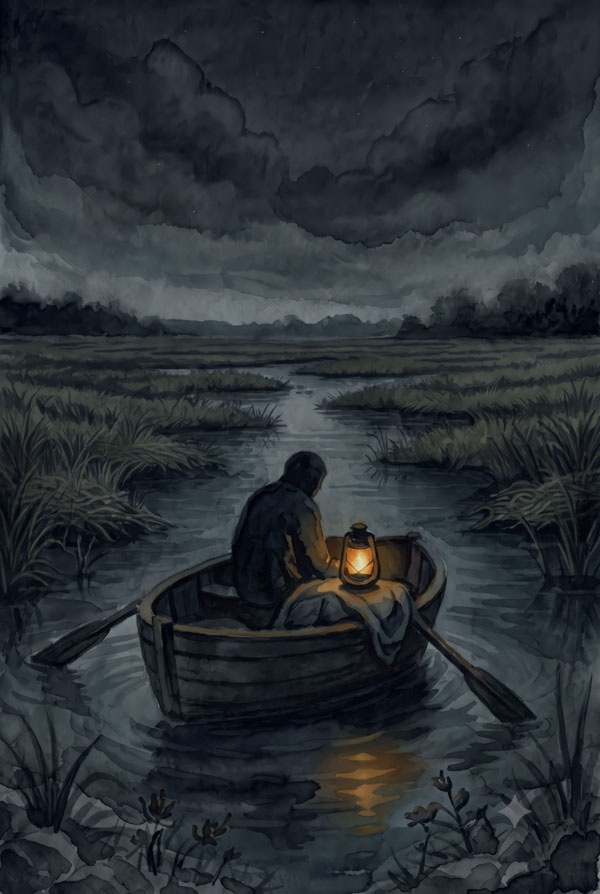
Slough of Despond

A River Runs Through Us

Throughout Heart & Courage, the river becomes more than a metaphor. Within the Upstream/Downstream Model, it becomes a way of orienting ourselves to four distinct psychosocial environments people may encounter as they move through life.

The four Zones aren’t categories of people, nor do they represent a predictable progression toward violence. People may move upstream or downstream, experience more than one Zone at once, or find themselves carried into very different terrain through loss, trauma, crisis, or significant change. Being farther downstream does not, by itself, mean that someone poses a threat of violence.

These environments aren’t passive backdrops. They shape what people notice, feel, believe, and do, even as our presence, choices, and relationships alter what becomes possible within them.

We shape our environments, and our environments shape us.

Heart & Courage begins its journey downstream, where signs of distress, grievance, desperation, or concerning behavior may be more visible and the need for assessment, intervention, mitigation, or protection more immediate. From there, we travel upstream, asking a different set of questions: What conditions shaped this terrain? What sources of connection or support were present or absent? And what might become possible if we learned to recognize stress, disconnection, and drift sooner?

Language for the Zones

The river is best understood by entering its different terrains. Open each Zone to explore what tends to take shape there, what may become visible, and what the terrain may ask of those who enter it.

Where the horizon can begin to disappear.
At the farthest reaches downstream, people may be navigating profound psychological distress, accumulated loss, grievance, isolation, desperation, or a diminishing sense that meaningful options remain available to them. For some, the world may have narrowed considerably.

This is often the terrain where concerning behaviors become more visible and the need for behavioral threat assessment, intervention, mitigation, support, or protection may become more immediate. Yet being here does not, by itself, indicate that someone poses a threat of violence. The Sea asks us to hold both realities at once: to recognize the depth of human distress while remaining clear-eyed about behaviors, circumstances, and conditions that may require attention.

Where the current slows and the way forward can become harder to see.
Moving upstream, the Slough of Despond represents terrain where accumulating stress, loss, disappointment, disconnection, or unresolved grievance may begin to weigh more heavily on how someone experiences and moves through the world. People may feel increasingly isolated, depleted, discouraged, or uncertain that their circumstances can meaningfully improve. This is also terrain where sustained workplace stress may contribute to burnout, or where moral injury may begin reshaping how someone experiences work, relationships, and self.

Changes in behavior, relationships, performance, communication, or engagement may become more noticeable here, although their meaning isn’t always obvious. The Slough invites us to become curious before drawing conclusions: to notice what may be changing, consider what might be shaping those changes, and recognize opportunities for reconnection, support, accountability, or intervention before the current carries someone farther downstream.

Where small currents of friction can begin to change the water.
Farther upstream, the Marsh of Incivility represents the everyday relational terrain where disrespect, exclusion, unresolved conflict, poor communication, mistrust, or indifference can begin to alter the quality of an environment. Not every slight is intentional, and differences in communication, expectations, or social norms can create friction without malice. Yet even unintended moments can accumulate. Over time, what’s tolerated, repeated, misunderstood, or left unaddressed can begin shaping the culture around us.

The Marsh reminds us that environments teach. The ways people speak to one another, respond to disagreement, exercise authority, repair harm, establish boundaries, and demonstrate respect all influence what becomes “normal.” Here, prevention begins to look less like identifying a person of concern and more like noticing the conditions we are collectively creating, reinforcing, or allowing to persist.

Where connection, support, and belonging keep the waters crisp and clear.
At the farthest reaches upstream, the Headwaters of Health & Wellbeing represent psychosocial environments where people are more likely to experience meaningful connection, support, belonging, engagement, psychological safety, and a sense that they matter. These aren’t environments without conflict, stress, disappointment, or accountability. Rather, they’re environments that have strong relational and organizational resources for navigating them.

Here, prevention becomes less about responding to concerning behavior and more about tending to the conditions that help people and communities remain strong and resilient. Relationships matter. Leadership matters. Culture matters. The Headwaters invite us to consider how the environments we create can strengthen connection, preserve dignity, make it safer to speak honestly or ask for help, and increase the likelihood that stress and struggle are noticed before they deepen and harden.

The Headwaters aren’t a destination we permanently reach. They’re conditions we continually create, nurture, and sustain.

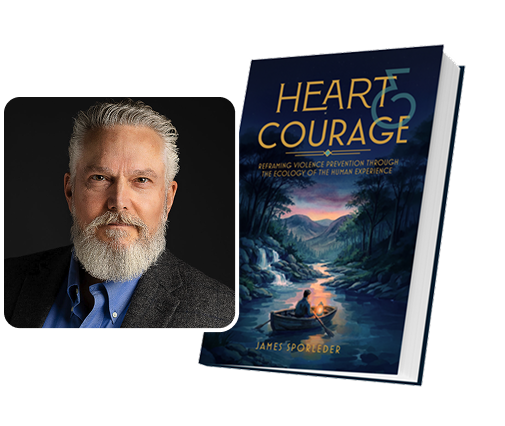
James and book cover

About the Author

Where This Work Comes From

James Sporleder is the founder of Regulus Group and has spent much of his career working where human behavior, organizational culture, safety, and violence prevention converge. His work has taken him into classrooms, workplaces, leadership teams, and difficult conversations where people must interpret behavior, make consequential decisions, and respond without losing sight of either the person before them or the realities surrounding them.

Heart & Courage grew from a question that followed him through years of practice: What becomes possible when we widen our understanding of human behavior without surrendering accountability, discernment, boundaries, or our responsibility for safety and security?

This book is his effort to explore that question alongside those who are asked to hold competing responsibilities at once: to understand and assess, to support and protect, to practice compassion and discernment, and to act with both decisiveness and humanity.

Heart & Courage Pre-Order Updates

Interested in getting your copy this fall? Sign up below to get on the list and we’ll keep you up-to-date with publishing details.

Get In Touch

Have questions about how to get started?

Scroll to Top